
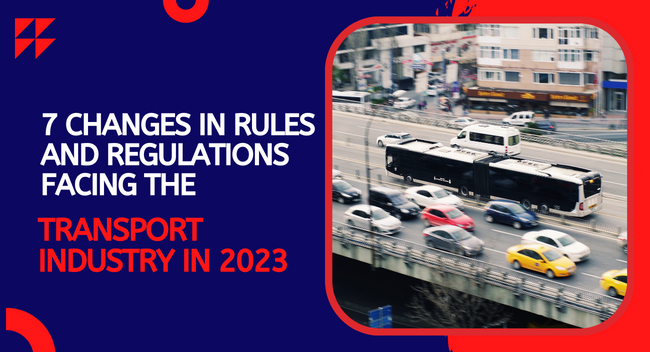
The year 2023 brings with it a lot of rules and regulations changes, modifications, and surprises for the trucking and transportation industries in the USA. There have been a few bills that were approved in 2021. The latest and the most significant bill to come out has been the next farm bill which is going to have a lot of impact on the transport sector as a whole. The following section talks about some of the changes in the transport industry regulations that you should be aware of as a part of the trucking and logistics sector in the country. Let’s discuss:
1. The Rules Related To Emissions And Tax Credits
The latest Heavy Duty Engine Rule was finalized by the environmental protection agency last year. This is going to go into effect for all 2027 commercial vehicles. According to the latest reports, it could increase the cost of diesel trucks by $42000. As a carrier, choosing non-diesel or gasoline commercial vehicles would enable you to save $40,000 in tax credit under the new IRS guideline tied to the Inflation Reduction Act of 2022.This means that if you choose to buy an electric vehicle, you will get a $40,000 subsidy straight away. On the other hand, it will also imply that you have to pay a $42,000 penalty if you choose to buy a diesel vehicle.
2. Drug And Alcohol Clearinghouse Rules
Do you know that more than 3 million drivers have already registered with the clearinghouse ever since it came into existence in 2020? According to the FMCSA, there are 4.5 million commercial driver’s license holders that were queried within the system. More than 1,72,000 drivers were cited for violations. As the rule says, any fleet or trucking company does not have to ask applicants or even the previous employers of these applicants for the drug and alcohol testing history of any candidate. In the transport industry, especially employers and carriers, everyone must conduct a free employment query within the clearinghouse. The authorities encourage this practice as the information is reliable and eliminates human error.
3. Hair Testing And Related Aspects
Experts are constantly discussing whether to report positive test results from a driver’s hair follicle to the drug and alcohol clearinghouse. This debate has been there for quite a while. The FMCSA continues to deny this on a technicality. The Federal Department of Health and Human Services has yet to decide this year whether to recognize hair testing as an acceptable screening method for results submitted to federal agencies, including the clearinghouse, according to the latest developments. Federal authorities as well as the transport companies and carriers in the industry are waiting for the final rule to come out. According to the latest buzz, the FMCSA is highly likely to accept hair samples as a voluntary alternative to tests that involve urine and blood samples.
4. Changes In Independent Contractor Rules
The Labor Department’s Wage And Hour Division made a worker classification proposal last year. In response to the proposal, people filed over 50,000 comments. The Biden administration tried to withdraw a rule enacted under the Trump administration. This makes it easier to classify workers as independent contractors. This comprises owner-operator truck drivers, independent workers, and other individuals that are classified by the federal government. However, a federal court upheld the rule, preventing this movement from falling through.The department of labor has discarded the Trump regulation’s focus on the nature of work and the degree of control of the work in addition to the worker’s opportunity for profit or loss.
5. Speed Limitations
Talks are going on about equipping commercial vehicles that have a gross weight of more than 26,000 LBS with an electronic engine control unit. This is going to help govern speed limits as per the FMCSA. The federal body has also indicated that it has plans to enact a rule on speed limits in June 2023. Independent drivers all over the industry have shown strong opposition to this rule. They argue that slower trucks are only going to lead to road rage and there will be more incidents of clashes between passenger vehicle drivers and slow-moving commercial vehicle drivers. It is also going to make highways less safe for everyone.
6. Electronic Truck IDS
There is also a discussion regarding electronic identification on commercial vehicles such as trucks and other automobiles. The Commercial Vehicle Safety Alliance had proposed that motor carriers must install an electronic identification apparatus on their vehicles. The electronic ID is designed to enable commercial vehicle inspectors to receive one-way wireless communication from the vehicle. This means that the inspector is going to have knowledge about the IDs of all the trucks that are functional in their vicinity. The safety records of the vehicle and the carrier will be accessible to the inspector using this piece of information.
7. IMO In 2023
The IMO refers to the new transport industry regulations that directly address carbon emissions for steamships, also known as cargo ships. The goal behind this rule is the decarbonization of the maritime as per the directions of the regulatory body of the United Nations. The aim is to reduce the carbon impact resulting from all ships globally by at least 40%. As we speak, regulators are collecting a lot of data to enforce the transport industry regulations introduced this year. Let’s take a closer look at them.
- Energy Efficiency Existing Ship Index Approval
The EEESI is going to consider the type of vessel, date of manufacturing, technical specifications, and also the size of the vessel. The ship must be approved under all the parameters of greenhouse gas reduction.
- Carbon Intensity Indicator Grade
All vessels should have an established CII. Grades from A to E will be assigned. A will be the best and E will imply corrective action.
- Ship Energy Efficiency Management Plan
Each vessel must have the SEEMP in place. This is to optimize its energy efficiency. Measures like better trip planning, regular equipment upgrades, heat recovery systems, and top-notch maintenance must be included.
Conclusion
The transport industry has already implemented some of these rules and regulations, while others are currently in the process of enactment. According to the latest news and developments, a lot of them will have a positive impact on the transport industry as a whole. Some of them might be a little difficult to follow in the beginning. The transport industry benefits from these developments in the grand scheme of things.





0 Comments