
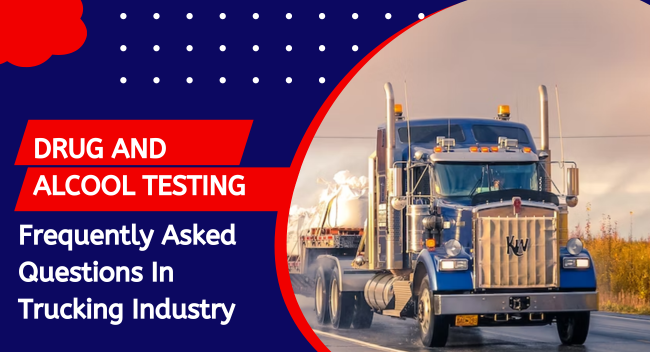
The most significant objective of the U.S. Department of Transportation and the Federal Motor Carrier Safety Administration is to make highways and roads safe for everyone. Every safety-sensitive driver involved in the commercial transportation industry is subject to drug and alcohol testing procedures. Before these drivers are allowed to operate in a safety-sensitive position, they must take a pre-employment drug test with a negative result. Proper drug and alcohol testing is essential to ensure compliance with the rules and regulations laid down by the FMCSA and avoid costly fines and civil penalties. Let’s look at some of the most common questions regarding drug and alcohol testing compliance below:
1. Do All My Truck Drivers Have To Be Enrolled In A Random Drug And Alcohol Testing Program?
As per the rules and regulations laid down by the FMCSA, all drivers in safety-sensitive positions who operate a commercial motor vehicle as defined in 49 CFR Part 382 must enroll in a random drug and alcohol testing program. This requirement includes but is not limited to full-time employees, casual, intermittent, or occasional drivers, and leased and independent owner-operator contractors.
2. As An Owner-operator, Am I Required To Be Enrolled?
Yes, if you are an owner-operator who operates a commercial motor vehicle as defined in 49 CFR Part 382, you are required to be enrolled in a random drug and alcohol testing program per the FMCSA.
3. When Are Drivers Required To Be Tested?
The following are six reasons why drug and alcohol testing is required.
- Pre-employment Testing – Done before they can begin safety-sensitive duties or responsibilities
- Random Testing – When randomly chosen during a testing period
- Reasonable Suspicion – When a supervisor observes a driver appearing to be under the influence of drugs or alcohol
- Post-Accident – After an accident
- Return-To-Duty – Required before a driver is allowed to return to safety-sensitive duties after testing positive for a drug test
- Follow-Up Testing – Required testing when a driver is involved in a substance abuse program
4. What Happens If A Driver Tests Positive Or Refuses To Take The Drug Or Alcohol Test?
If a driver refuses to take the test or does not show up for testing within a reasonable time, that is typically equivalent to failing a drug test. The first thing you should do as an employer is immediately remove said driver from all safety-sensitive positions. If they test positive or refuse to test, they are not legally permitted to operate a commercial motor vehicle. Additionally, they must visit a substance abuse professional (SAP) and successfully complete the program before they can be allowed to return to any safety-sensitive position.
5. Can I Include Non-CDL Drivers In The USDOT Random Drug And Alcohol Testing Program?
Only USDOT-regulated drivers can be enrolled in a USDOT random drug and alcohol testing program. You may, however, enroll your non-DOT-covered employees in a completely separate non-DOT testing pool.
6. What Controlled Substances Do They Test For?
The typical standard for USDOT testing is a five-panel drug test that includes Marijuana, Cocaine, Opiates, Amphetamines, and PCP. The drug test can be by a urine or oral fluid test.
7. Don’t They Do A Drug Test At My USDOT Physical?
The USDOT does not mandate a drug test for your USDOT physical. Instead, your health and medication records are thoroughly assessed by the doctor. As a standard procedure, a urine sample is usually collected for a urinalysis, strictly for screening medical conditions.
8. If I Am An Ag-exempt Farmer, Am I Exempt From Having To Test?
If you are operating a farm vehicle and staying within a 150-mile radius of your farm you are exempt from drug and alcohol testing. But beware, if you venture beyond this radius, enrollment in a random testing program is mandatory.
9. How Does Drug And Alcohol Testing Help Keep The Roads Safe?
Mandatory drug and alcohol testing is an excellent deterrent for keeping drug and alcohol offenders from choosing a career that would put them behind the wheel of big trucks and buses. These regulations are also a way to hold employers and drivers accountable. In return, it will help minimize the risks to other drivers and pedestrians.
10. How Do I Know If My Company Is Subject To Testing?
According to the current regulations, drug and alcohol testing is required for all employers and employees in safety-sensitive positions. For example, if you are in the aviation or transportation industry, operate commercial buses, work on railroads, or any form of public transportation, you are most likely in a safety-sensitive position.
Conclusion
Federal compliance in the transportation arena can often seem complicated and intimidating. Finding a reputable compliance company to assist you in navigating through this can mean the difference between your business running smoothly or making mistakes that could cost you thousands in fines and penalties or, even worse, could put you at risk of your business being placed out of service. DOT Compliance Group is registered with the FMCSA as a consortium/third-party administrator (C/TPA) for this program. Reach out today to DOT Compliance Group to get signed up.




0 Comments