
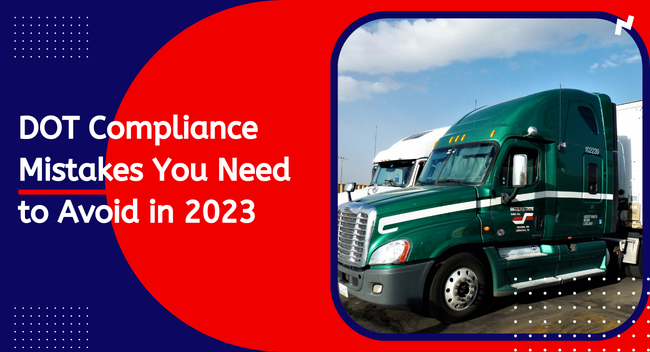
As an employer and a stakeholder in the transportation and logistics industry in the US, it is crucial to stay ahead of the curve when it comes to adhering to the regulations set by the US Department of Transportation (DOT) and the FMCSA. The DOT and the transport industry are constantly making changes to the existing rules and regulations, and it is imperative that you remain up to date with these changes. Failure to comply with DOT regulations could lead to fines and penalties that could potentially harm your business and employees. Avoid making costly DOT compliance mistakes by staying informed and proactive in your approach.
Why Is Dot Compliance So Necessary?
Staying compliant with these rules and regulations should motivate you as violating them results in heavy fines and penalties, which can put your company out of business. Federal law requires meeting certain standards, and failure to comply makes it almost impossible to revive your business. The following section discusses common dot compliance mistakes you should always avoid.
Common DOT Compliance Mistakes to Avoid:
1. Failing To Review Medical Examinations And Medical Card
As an employer, it becomes your responsibility to stay familiar with and well aware of the medical examiner’s handbook. You must also know which drivers working in your company have any skills performance evaluations coming up. Make sure that your drivers have the most appropriate and adequate knowledge about it.
You must continue to train and coach your drivers so that they remain aware of the best practices. It is critical to know these, especially when they are going through a DOT medical examination. This information comprises but is not limited to:
- Knowing all the details about their medications
- Keeping their medication and prescription with them
- Being prepared to answer any questions
2. Clinic-Related Errors
If you want to remain compliant with the rules and regulations laid down by the federal body, you must avoid these very common errors. These dot compliance mistakes can include the use of the wrong chain of custody, connecting with the wrong MRO to share documentation and the like. All the testing procedures must be carried out uniformly and consistently.
The absence of a clinic chain or net provider network prevents you from standardizing all your procedures. As an employer, it is your responsibility to understand the documentation workflow management of the clinic that you are using. You must take custody of the electronic DOT records of all the physicals on your drivers and safety-sensitive position holders.
3. Untimely Notification For Random Testing
This is also a very big mistake that you must avoid if you want to stay DOT-compliant. People think that this is going to prepare their drivers in advance but it does not happen that way. It actually defeats the purpose of a random testing program if you keep on notifying your drivers about the same. Your third party administrator and medical review officer will keep you well aware of when to announce a random testing procedure for your driver and safety-sensitive position holders.
The information related to these tests is highly confidential and must be well protected so that no driver or safety-sensitive position holder can find out about the same. This helps you run a tight ship at work and make sure that all your employees, associates, partners, and all individuals that operate critical machinery are 100% DOT-compliant.
4. Not Being Able To Manage Driver Qualification Files
Your driver qualification files are a critical tool in keeping you compliant with the rules and regulations laid down by the federal authority. These don’t just define the protocols and processes that are applicable to your drivers and managers but also the many fundamental concepts that help maintain compliance throughout your company.
Maintaining a DQ file properly is a great way to keep your drivers well aware of any of their expiring documents and permits. You can also invest in electronic driver qualification management software. Your TPA can assist you to meet your company’s needs year-round.
5. Failure To Implement An Hours-Of-Service Compliance Plan
Yes! There is an hours-of-service compliance plan as well. This is a process where you can review and audit your logs regularly. It is also important to constantly coach and train your drivers so that they are aware of the best practices when using this equipment. Failure to do so is only going to lead you to fines and penalties. As an employer, you can also implement an incentive program so that compliance can be promoted throughout your organization.
6. No Reasonable Suspicion Tests
When you forget to implement or carry out any reasonable suspension tests, things can get out of hand. The US department of transportation governs all entities, and the federal motor carrier safety administration enforces reasonable suspension training. This enhances your workplace safety and is quite helpful across non-DOT-regulated industries as well.
7. Taking The Services Of A Non-Compliant Driver
One of the biggest dot compliance mistakes you can make: hiring a non-DOT-compliant driver can lead to hefty fines.
8. Operating A Commercial Motor Vehicle With No License Or Permit
Whether you are a driver operating a commercial motor vehicle without the necessary license or an owner who allows unlicensed drivers to operate such machinery, the consequences can be severe. Furthermore, it is essential to note that disregarding this rule is never advisable.
Conclusion
Before implementing DOT-related procedures and policies, consult your third-party administrator or DOT compliance facilitator. They will explain how to ensure 100% compliance.




0 Comments